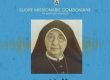
Maria Bollezzoli, the first Superior General of the Comboni Missionary Sisters, guided the congregation through its early trials with a gentle hand and a resolute spirit. Her story is a testament to the power of humble service and steadfast devotion in the face of adversity.
Born in Verona, Maria Bollezzoli felt called to religious life from a young age. Unable to enter due to family obligations, she dedicated herself to educating youth as a lay Ursuline. Her life took an unexpected turn in 1874 when Frs. Stanislao Carcereri and Antonio Squaranti, at Comboni’s behest, sought her out to serve as novice mistress for the fledgling congregation.
With characteristic humility, Maria questioned their choice. Yet, in obedience, she embraced this new mission, entering the novitiate herself at age 46. On December 8, 1874, she was the first to receive the religious habit, and two years later, on October 15, 1876, the first to profess her vows into Comboni’s hands, earning her the title “Pia Madre della Nigrizia numero uno.”
As Superior of the motherhouse and novice mistress, Maria instilled Comboni’s missionary zeal in the young sisters, despite her own lack of missionary experience. Comboni held her in high regard, describing her as “a woman of piety, sound judgment, and effectiveness, but timid, most humble and diffident of herself.”
Maria’s humility and deference to authority would prove pivotal in preserving the congregation after Comboni’s death. Navigating the complexities of the institute’s reorganization under the Jesuits, who insisted on a strict separation between the male and female branches, Maria faced increasing hardships and financial uncertainty.
Her wisdom and quiet strength shone through in her responses to these trials. When Msgr. Antonio Maria Roveggio, Comboni’s successor, presented her with a pre-signed agreement cutting the sisters’ monthly allowance, Maria refused to “sign the congregation’s suicide,” seeking counsel from trusted advisors and appealing to Propaganda Fide for justice.
Similarly, Maria fought to ensure that a dowry would not be mandatory for aspirants, insisting that an authentic missionary vocation mattered more than wealth. Her perseverance bore fruit when the congregation’s first Constitutions, approved in 1897, allowed for accepting dowry-less postulants.
In 1898, Maria was confirmed as Superior General in the Pie Madri’s first General Chapter. Though she felt unequal to the task, her leadership had already steered the congregation through some of its darkest days. Her legacy would endure in the sisters she formed and the spirit of Comboni she enkindled in their hearts.
Maria Bollezzoli’s life is a study in quiet heroism. Never seeking the limelight, she led with a mother’s heart, her strength rooted in humility, obedience, and an unwavering commitment to Comboni’s charism. Through trials and triumphs, she embodied the virtues that would come to define the Comboni Missionary Sisters: resilience, sacrifice, and an unshakable trust in God’s providence. Her story reminds us that the most enduring legacies are often forged by those who serve with hidden, steadfast love.