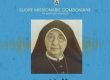
As World War I engulfed Europe, Mother Costanza Caldara, the Comboni Missionary Sisters’ second Superior General, made pivotal decisions that ensured the congregation’s survival and set the stage for its post-war expansion. Her strategic foresight and unwavering commitment to the missionary call led the Pie Madri to new frontiers.
In 1914, on the eve of Italy’s entry into the Great War, Mother Costanza seized an opportunity to secure the congregation’s future. Recalling Mother Maria Bollezzoli’s anguish at being forced to turn away poor aspirants, Costanza resolved that no authentic missionary vocation should be hindered by lack of space or finances.
When the Comboni Fathers offered the Cesiolo property, originally intended for their own formation house, Mother Costanza recognized the moment. With the Bishop’s approval, she invested the funds from the administrative division to acquire this expansive villa, a decision that would prove providential for the congregation’s growth.
Later that year, another crucial juncture arose. Don Luigi Bonomi, a former Comboni missionary serving as a military chaplain in Asmara, Eritrea, requested sisters for the colonial hospital. Some questioned whether this deviated from the Pie Madri’s Central African focus, but Costanza grasped the broader implications.
The financial constraints imposed by Bishop Geiger in Central Africa had crystallized a hard truth: to remain in their core mission, the sisters needed to expand beyond it. By accepting the Asmara mission and others like it, the congregation could sustain the formation of young sisters and care for the sick and elderly, vital for its long-term viability.
Among the sisters chosen for Asmara was Sr. Pia Marani, a Veronese who dreamed of serving in Central Africa. Initially disappointed by her assignment, Pia discovered the true meaning of mission in Asmara’s peripheries. In the suffering and abandonment of the city’s outcasts, she encountered Christ and embraced her missionary vocation anew, opening the enduring Casa Comboni.
As the war raged on and aspirants continued to knock at the door, Mother Costanza explored new foundations in Italy. Undaunted by travel’s hardships, she journeyed to Africa in 1919, determined to plant the congregation’s flag across the continent. From Gulu to Wau, Kitgum to Kayango, Costanza forged a network of communities that embodied Comboni’s vision.
In this endeavor, she found an ally in the Countess Ledóchowska, foundress of the Sisters of St. Peter Claver and a great benefactor. The Countess’ support proved invaluable, enabling the Pie Madri to bridge the gaps left by sparse agreements with the Vicariate.
Mother Costanza Caldara’s leadership during World War I testifies to the power of a vision rooted in faith and shrewd practicality.